If you asked people around the world to name their favorite color, blue would win—again and again.
We Are Conditioned By Nature to Love Blue
For most of human history, blue meant something important:
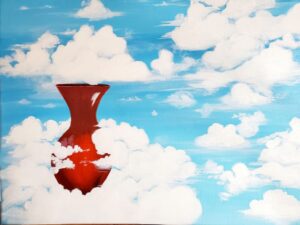
- Blue skies signal serenity
- Blue water meant survival
- Blue horizons suggested possibility and space
Our brains learned to associate blue with stability and abundance, not danger.
It invites us to sloBlue calms us. It’s Safe. Trustworthy.
We associate the color blue with an overwhelming sense of
- Calm
- Stability
- Trust
- Reliability
Psychology shows us that blue has a soothing effect on the nervous system. It can lower our heart rate, reduce stress, and create a sense of ease. That’s one reason blue is so commonly used by banks, healthcare organizations, educational institutions, and technology companies.
Blue doesn’t shout.
It reassures.
In creative work settings, this matters. When people feel calm, they’re more open—to accepting and generating ideas, to connection, and to self-expression.
w down, look outward, and breathe. Yes!
Across many cultures, generations, and industries, blue consistently ranks as the most beloved color on our planet. We love it in art, fashion, branding, our rooms, and the digital spaces we navigate every day.
So what makes it so popular? There’s something deeper—psychological, emotional, and even evolutionary—behind our collective attraction to blues.
Blue Is Universally Appealing
Many colors carry strong cultural or emotional associations that vary widely by region. Blue, however, is one of the least divisive colors worldwide.
Research consistently shows that:
- Blue is the top favorite color for both men and women, no surprise there!
- It appeals across age groups
- It works equally well in bold, dramatic and monotones
Because of this, blue is often the color people choose when they’re unsure—it feels like a safe, welcoming starting point.
Blue in Art: Emotion Without Overwhelm
In art, blue has long been used to express:
- Reflection
- Longing
- Depth
- Peace
- Quiet emotion
Artists throughout history have turned to blue during introspective or emotionally complex periods, using it to convey feeling without chaos. Blue allows for emotion without overwhelm.
The power of blue is why we frequently recommend varying shades for group art experiences. People connect in personal ways—without feeling exposed or pressured.
Color, Creativity, and Meaningful Gatherings
When people come together to create, color becomes more than decoration—it becomes a shared language.
Blue, in particular, encourages openness and connection. It helps people relax into the experience, whether they’re celebrating, collaborating, or simply taking time for themselves.
This is why blue-inspired palettes naturally appear so often in:
Creating in a calming environment allows guests to slow down, connect, and leave with something meaningful—both physically and emotionally.
Explore Color Through Art at Studio 928
We explore color not just as pigment, but as a way to express emotion, to tell a story, and to experience in its raw state. Through paint-and-sip events, private art gatherings, and painting workshops, we bring people closer to their personal self expression.
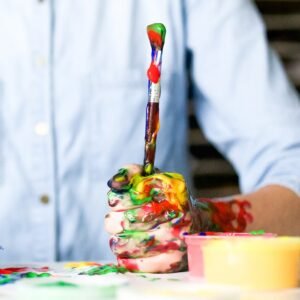
Sometimes the most powerful thing you can do is pick up a brush…
and start with blue.
Upcoming Art Classes at Studio 928